


The Hidden Cost of Entrepreneurship: Loneliness, Decision Fatigue, and Identity
How entrepreneurs build real connections, protect their mindset, and design a life that doesn’t cost them their health
Entrepreneurship sells freedom. But in the quiet parts, it can deliver something else: isolation.
Not the “I like being alone” kind. The chronic kind, where you’re surrounded by people and still feel like you’re carrying the weight by yourself. And it’s not just a vibe. The health consequences of prolonged loneliness and social isolation are serious: increased risk of premature death, and elevated risk for heart disease and stroke are repeatedly cited in public-health advisories.
So if you’re building something, especially if you’re a founder, executive, or professional carrying responsibility, this isn’t “soft.” It’s operational.
This is a guide to finding your tribe: the people who sharpen you, steady you, and keep you human, while you scale your business. We’ll talk mindset, systems, decision fatigue, and why your image (done properly) can be one of the simplest levers for reclaiming energy and confidence.
Why entrepreneurs get lonely (even when they’re “winning”)
Entrepreneurial loneliness often comes from a few predictable forces:
1) Responsibility creates distance.
When you’re the decision-maker, you naturally censor. You don’t want to burden your team. You don’t want to worry your spouse. You don’t want to look uncertain in front of clients. Over time, you become “the strong one,” and the strong one often becomes the silent one.
2) Your schedule becomes a wall.
Friends invite you out. You can’t go. Or you go, but you’re mentally still at work. Eventually, people stop asking. Your calendar becomes your identity.
3) You outgrow rooms (and don’t replace them).
As your standards rise, some relationships no longer fit. That’s normal. The mistake is failing to intentionally replace those relationships with higher-alignment communities.
Research in entrepreneurship and management links loneliness to negative outcomes for well-being and business performance, and studies have found that higher loneliness can increase founders’ exit intentions by reducing entrepreneurial passion.
This is why “just work harder” is the wrong prescription. You don’t need more grind. You need a better design.
Mindset is the foundation: you don’t “find” your people, you become findable
The tribe you want won’t show up because you hope for it. It shows up when your habits make you visible in the right places, and your mindset keeps you open long enough for real relationships to form.
Here’s the shift:
From: “I need people who get me. To: “I’m going to build a life that makes connection inevitable.”
That’s a mindset change, and it matters because loneliness often snowballs. When you feel disconnected, you withdraw. When you withdraw, you become harder to reach. When you become harder to reach, you feel more disconnected.
So the first move is internal:
Practice “open-minded proximity.”
Be open-minded about where your people might be. Sometimes your tribe isn’t in the obvious places. Sometimes they’re in:
- A niche fitness class at 6:00am
- A member’s lounge at a hotel
- A local charity board
- A professional community you judged too quickly
- A mastermind you assumed was “cringe” until you met the right one
Your people don’t always look like you. They often think like you.
Chronic loneliness isn’t just emotional, it's physiological
This is the part most high performers ignore until their body forces the conversation.
Major health organizations have framed loneliness and social isolation as a public-health issue, associated with increased risk for heart disease, stroke, mental health challenges, and premature death.
The point isn’t to scare you. It’s to reframe connection as a non-negotiable input. These are the priorities: sleep, training, and nutrition.
If you’d never say, “I’m too busy to sleep,” you also shouldn’t say, “I’m too busy for people.”
The balance: owning a business vs. owning your life
A business will consume as much of you as you allow. The solution isn’t “more willpower.” It’s systems.
Three systems that protect your life while you build
1) The Connection System (scheduled, not spontaneous)
Connection can’t rely on luck. Create non-negotiable recurring touchpoints:
- Weekly lunch with one peer
- Monthly dinner with a small circle
- Quarterly trip or retreat (even local)
- A standing “walk-and-talk” slot
- A hobby group that has nothing to do with business
Put it in the calendar like a client meeting. Because it is.
2) The Output System (focus blocks + constraints)
A lot of loneliness is actually a symptom of chaotic work: you’re always “on,” always reacting, always behind.
- One or two deep-work blocks per day
- A daily shutdown ritual (a hard stop)
- Constraints on meetings (batch them)
When your days feel cleaner, you become more present with people.
3) The Identity System (reduce decision fatigue)
This is the hidden killer: you burn mental energy on small choices, then you have nothing left for real connection.
Decision fatigue is a well-discussed concept in psychology and behavioural science; repeated decisions can degrade self-control and decision quality over time. Your brain is not meant to negotiate 50 micro-decisions before noon, which leads to something most entrepreneurs underestimate:
The underrated leverage: your wardrobe as an energy system
Most people treat style like decoration. That’s why it drains them. When done properly, style becomes a system:

- fewer decisions
- higher confidence
- stronger presence
- consistent identity
- less morning friction
There’s also research suggesting clothing can influence psychological processes through meaning and the experience of wearing it (often discussed under “enclothed cognition”), though modern reviews note the evidence is mixed across effects. Translation: your clothes won’t magically transform you, but what you wear can meaningfully shape how you show up.
And showing up matters, because your tribe tends to form around consistent signals:
- How you carry yourself
- How you communicate
- What rooms do you choose
- What you tolerate
- What you’re available for
Your wardrobe is a visible vote for your standards.
How an image consultant eliminates decision fatigue and upgrades your environment
Most entrepreneurs don’t need “more clothes.” They need a uniform built for their real life.
That’s where an image consultant becomes practical, not indulgent:
What gets removed
- Standing in front of a closet, negotiating with yourself
- Buying random pieces that don’t integrate
- Looking “successful” sometimes and uncertain other times
- Dressing for a fantasy version of your life instead of the actual one
What gets installed
- A capsule wardrobe that works across your week
- Pre-built outfit formulas for business, social, travel, and events
- A consistent signature look (authority without trying)
- Fewer decisions → more bandwidth → more presence
When you remove friction from your mornings, you stop leaking energy. That energy can go into the two places it belongs:
- high-leverage business moves
- real relationships
The tribe strategy: the 5-room method
If you want to avoid chronic loneliness, you need multiple “rooms” in your life, because no single person or group should carry all your needs.
Here are five rooms worth building:
Room 1: The Builders
People are building at a similar pace. Operators. Founders. Leaders.
You need peers who understand the load.
Room 2: The Grounders
People who keep you human. Family. old friends. mentors. community.
They remind you that life is bigger than your business.
Room 3: The Expanders
People ahead of you. They raise your standards.
Not motivational speakers, real proximity to people living what you want.
Room 4: The Enjoyers
People you simply have fun with.
Not networking. Not a strategy. Just laughter.
Room 5: The Craft Circle
People who share a craft: fitness, golf, wine, cars, art, style, whatever it is.
A shared craft creates low-pressure consistency, which is what connection needs.
Most lonely entrepreneurs have one room: work. That’s not a tribe. That’s a tunnel.
Where Conxeppt fits in: presence that creates momentum
At Conxeppt, we work with business owners and professionals who have taste, but not a system.
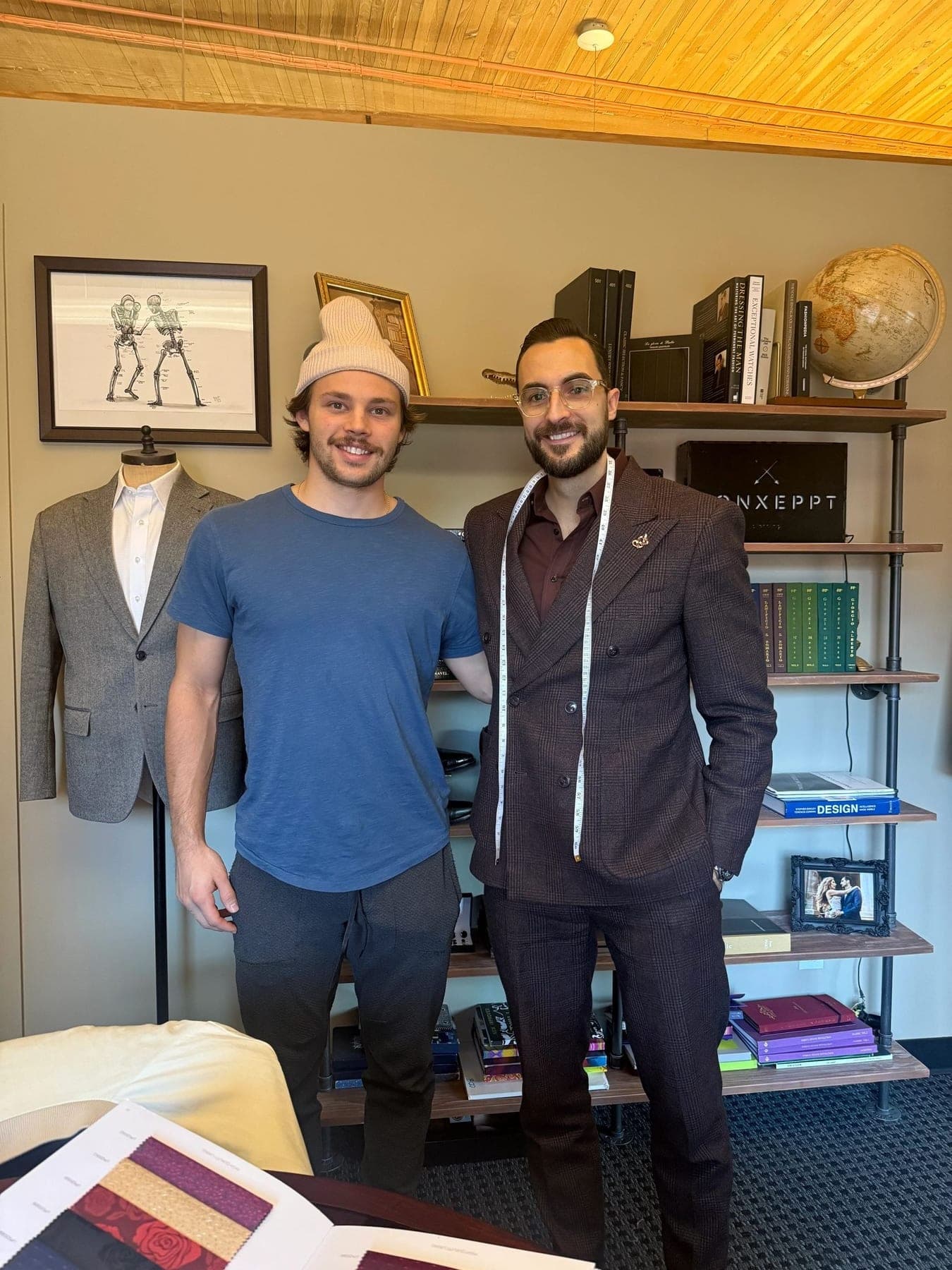
They’re capable humans who:
- rely on repeated basics
- feel inconsistent on camera or in meetings
- want to look like the leader they already are
- are tired of overthinking clothing
Dave Pavelich has helped clients find their stride by building wardrobes that:
- reduce decision fatigue
- increase confidence without noise
- match the demands of their lifestyle
- support their leadership presence in the rooms that matter
And here’s the bigger truth: When your presence becomes consistent, connection gets easier.
Because you stop hiding. You stop feeling “behind.” You stop thinking you need to become someone else before you’re allowed into better rooms. You walk in as you are, just sharper, clearer, and more intentional.
A simple plan for the next 30 days
If you want a tribe, and you want your life back, do this:
Week 1: Audit
- Where do you currently get connections?
- Which “rooms” do you have? Which are missing?
- What does your calendar reveal about your values?
Week 2: Install
- Schedule one recurring connection point (weekly or bi-weekly)
- Join one craft-based group (gym, golf, club, class, community)
- Book one lunch with a peer you respect
Week 3: Simplify
- Create 3 go-to outfits you can repeat
- Remove anything that creates friction or indecision
- Build a basic “uniform” for your workweek
Week 4: Upgrade
- Add one higher-standard room (mastermind, private dinner, community, board)
- Invite someone forward (don’t wait to be invited)
- Protect one evening a week as “life ownership.”
Consistency beats intensity. Always. Finding your tribe isn’t about becoming popular.
It’s about building a life where you’re supported, challenged, and seen, so you can build your business without sacrificing your health, your relationships, or your joy. You can own the business and still own your life.
If you want help turning your wardrobe into a system, something that eliminates decision fatigue and upgrades how you show up in the rooms that matter. Conxeppt offers private consultations built for business owners and professionals who take standards seriously.
Presence first. Then performance.