
Custom suit measurements are the foundation of a garment that fits cleanly, moves comfortably, and maintains its shape over time. Unlike standard sizing, professional measuring focuses on how the body is built, how it moves, and how the suit is intended to be worn. At Conxeppt Clothing, measurements are interpreted rather than simply recorded, ensuring the final suit reflects real proportions rather than generic numbers.
Understanding how custom suit measurements work helps explain why professionally fitted garments deliver results that self-measuring or size charts cannot replicate.
Why Custom Suit Measurements Matter
Custom suit measurements go beyond basic dimensions. They provide the data needed to balance the jacket, shape the trousers, and create harmony between structure and comfort. At Conxeppt Clothing, measurements are used to adjust patterns, not force bodies into preset templates.
Accurate measurements help:
• eliminate pulling or excess fabric
• improve posture alignment in the jacket
• maintain consistent sleeve and trouser length
• enhance comfort when standing, walking, and sitting
These refinements are what separate custom tailoring from altered off-the-rack suits.
Core Body Measurements Used in Custom Suits
A professional fitting captures a complete set of measurements that work together as a system. Each number affects how the suit is cut and assembled.
Key measurements include:
• chest to determine jacket structure and suppression
• waist and hips to balance jacket and trouser proportions
• shoulder width and slope to control drape and alignment
• sleeve length based on arm position and shoulder angle
• jacket length to maintain visual balance
• inseam and rise to define trouser fit and break
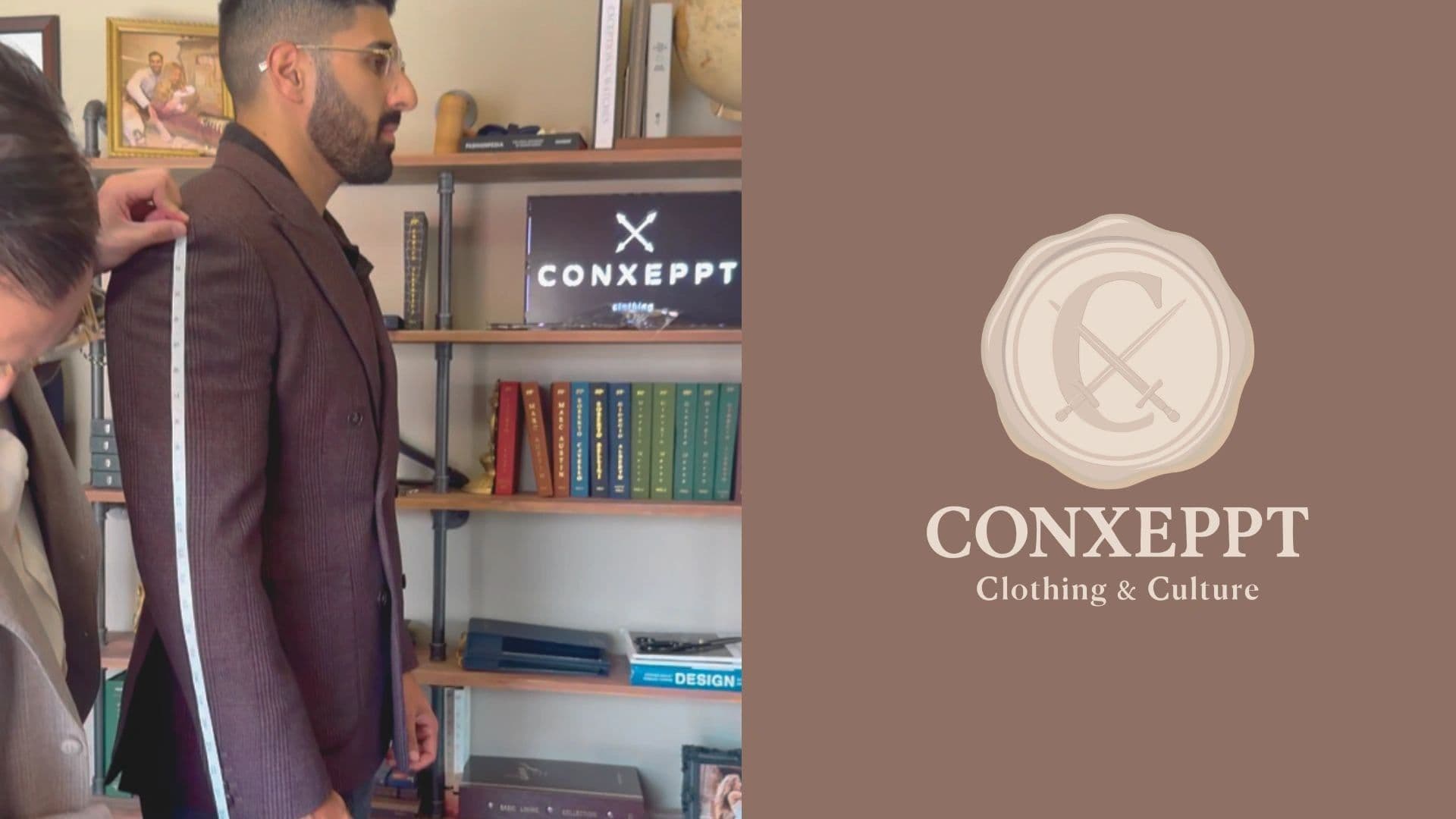
Professional measurements are taken using a tailor’s tape and consistent anatomical reference points rather than casual estimates. The fitter measures while the client stands in a natural, relaxed posture to avoid distortion. Measurements are taken snug but not tight, allowing the fitter to assess true body dimensions while accounting for movement and comfort. This controlled approach ensures accuracy and repeatability, which is essential for pattern adjustments and long term consistency.
How Posture and Stance Affect Measurements
Posture plays a major role in how measurements are interpreted. Two people with identical dimensions can require very different pattern adjustments based on how they stand and move.
During a professional fitting, attention is given to:
• forward or upright posture
• shoulder rotation and slope
• chest expansion and spinal curvature
• natural arm hang and movement
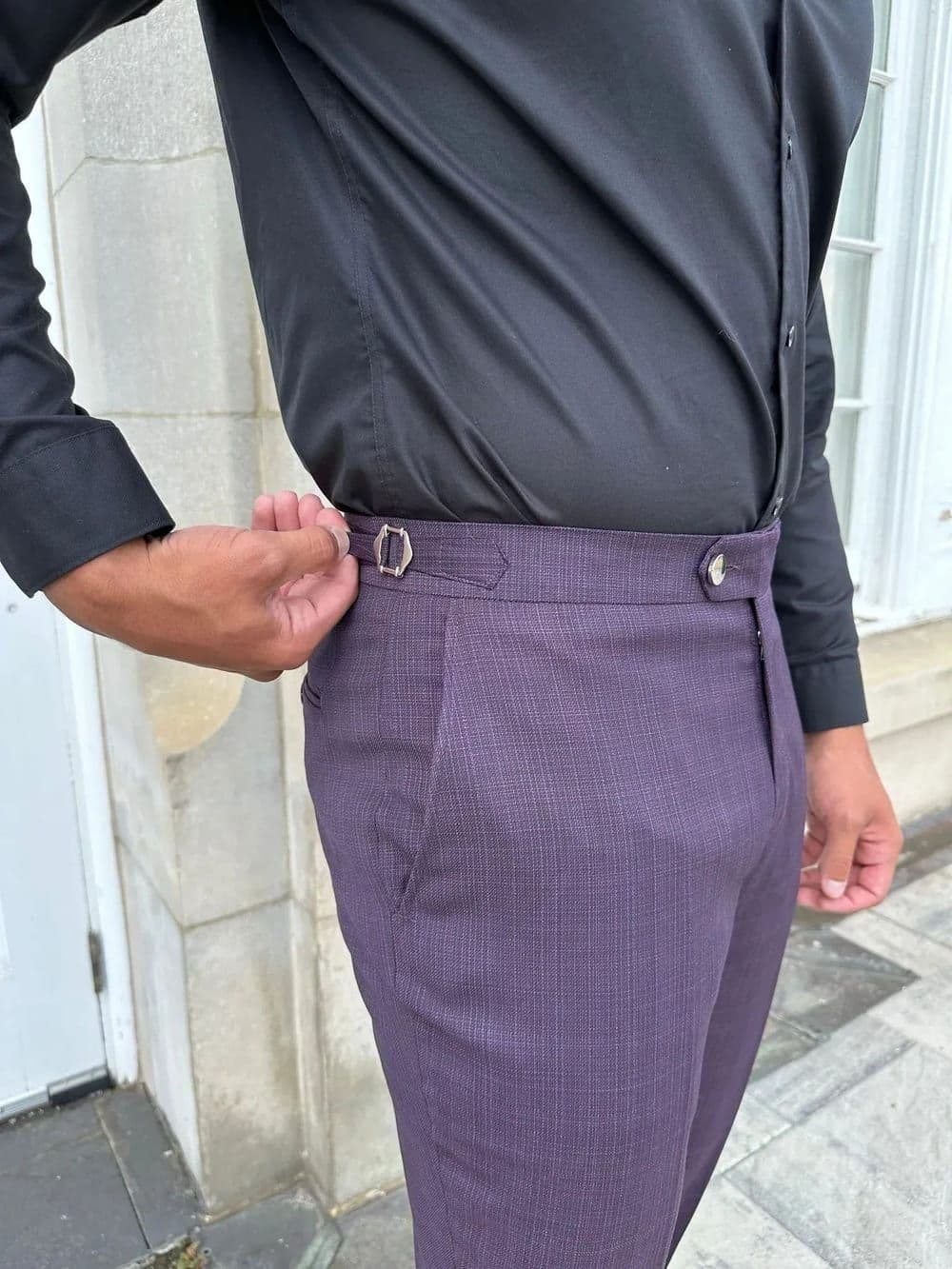
Posture analysis also informs advanced tailoring considerations that affect how the suit hangs on the body. Factors such as jacket balance, sleeve pitch, and garment pitch are evaluated to ensure the jacket sits cleanly from the collar through the hem. Canvas structure and internal support are adjusted based on chest shape and posture so the suit maintains its form without appearing rigid or restrictive.
Accounting for Body Asymmetry
Natural asymmetry exists in nearly everyone. One shoulder may sit lower, one arm may be longer, or one hip may carry more weight. Professional fitters recognize these differences and adjust measurements accordingly.
Instead of averaging measurements, fitters may:
• adjust sleeve lengths independently
• modify shoulder structure on one side
• correct trouser balance for hip alignment
These adjustments ensure the finished suit appears symmetrical even when the body is not.
How Suit Use Influences Measurement Decisions
Measurements are interpreted differently depending on how the suit will be worn. A business suit, wedding suit, and travel suit all place different demands on fit and movement.
Fitters consider:
• seated comfort for office wear
• mobility and breathability for long events
• structure and presence for formal occasions
This context influences ease allowances, jacket suppression, and trouser rise, ensuring the suit supports its intended purpose.

Why Professional Measuring Beats Self Measuring
Self-measuring often focuses on single dimensions without understanding how they interact. This can lead to common fit problems such as tight shoulders, twisting sleeves, or uneven trouser breaks.
Professional measuring provides:
• consistent measurement technique
• posture and movement assessment
• pattern-based interpretation rather than raw numbers
• adjustments for asymmetry and balance
Clients interested in craftsmanship and fit philosophy often explore tailoring and menswear insights to better understand how professional measuring shapes the final garment.
How Measurements Translate Into a Finished Suit
Once measurements are taken, they are used to modify a base pattern rather than create a suit from numbers alone. This allows tailors to shape the garment to complement the body while maintaining clean lines and structure.
Measurements also create long-term value. Once your profile is established, future suits can be produced with greater efficiency and consistency, improving fit with each iteration.
Clients ready to begin the process or update their measurements can schedule a suit measurement appointment directly with Conxeppt.
Custom suit measurements are not about precision for its own sake. They are about translating how your body moves and lives into a garment that feels intentional, balanced, and built to last.