
Suit colours work best when they support your skin tone, undertone, hair colour, and natural contrast. A colour that looks refined on one person can feel disconnected on another because the balance between fabric, complexion, and contrast changes from person to person. Conxeppt Clothing approaches custom clothing as a personalized process, helping clients in Edmonton select colours that align with their proportions, wardrobe goals, and overall presence.
Why Colour Matching Matters More Than Trends
Trend-driven colours often work best in editorials or seasonal collections, but long-term wardrobe versatility usually depends on how well the colour suits the wearer. A properly matched suit colour keeps facial definition clear and ensures the garment feels consistent across business, formal, and social settings.
Colour matching also affects how custom tailoring is perceived. Strong fit and construction can lose visual cohesion when the colour creates too much contrast or softness near the face. Conxeppt Clothing’s tailoring process focuses on intentional garment design, including selecting colours that complement the wearer rather than compete with them.
Identifying Your Skin Undertone
Skin undertone is the underlying warmth, coolness, or neutrality beneath the surface of your skin. It differs from skin depth or tanning in that the undertone remains relatively stable even when the surface tone changes due to sun exposure or lighting.
Warm, Cool, and Neutral Undertones
Warm undertones usually carry golden, peach, or yellow depth. Colours such as warm navy, olive, camel, tobacco brown, and earthy greens commonly work well with this undertone.
Cool undertones usually contain pink, blue, or red depth. Charcoal, true navy, cool grey, burgundy, and sharper blues often create cleaner separation against cooler skin.
Neutral undertones sit between warm and cool. This usually creates more flexibility, but colour intensity and contrast level still affect which shades feel balanced.
Undertone can often be identified through comparison. Skin that appears clearer beside silver jewellery, crisp white, or cooler blues is commonly cooler. Skin that responds better to gold jewellery, cream tones, or earthy colours is commonly warmer.
How Undertone Affects Colour Pairing
Undertone changes how colour reflects against the face. Cooler skin paired with overly yellow or muted browns can appear less defined, while warmer skin beside icy greys or very blue-based colours can feel less balanced.
Neutral undertones can support both warm and cool palettes more easily, but very pale, highly saturated, or heavily muted colours may still create a different visual effect depending on the person’s natural contrast.
Matching Suit Colours to Skin Tone
Skin tone influences how much depth and separation a suit colour should create. Saturation matters as much as darkness because muted and vivid versions of the same colour can produce very different results beside the skin.
Best Options for Lighter Skin Tones
Lighter skin tones often benefit from colours that create enough structure around the face without becoming overly dominant. Navy, charcoal, forest green, medium grey, and deeper brown usually provide reliable contrast while remaining versatile.
Very pale beige, washed-out grey, or extremely light pastels can reduce facial definition when there is not enough separation between the garment and the complexion. In those situations, stronger shirt contrast or textured fabrics can help rebalance the outfit.
Best Options for Medium and Olive Skin
Medium and olive skin tones often work well with navy, charcoal, rich blue, tobacco brown, deep green, and balanced mid-grey. These colours usually provide depth without creating excessive contrast.
Olive undertones can shift warmer or more muted depending on the individual. Yellow-heavy tans, pale greens, or dusty browns can sometimes blend too closely with the skin, softening visual definition around the face.
People who sit between undertones or contrast categories often benefit from balanced mid-depth colours rather than very dark or extremely pale shades.
Best Options for Darker Skin Tones
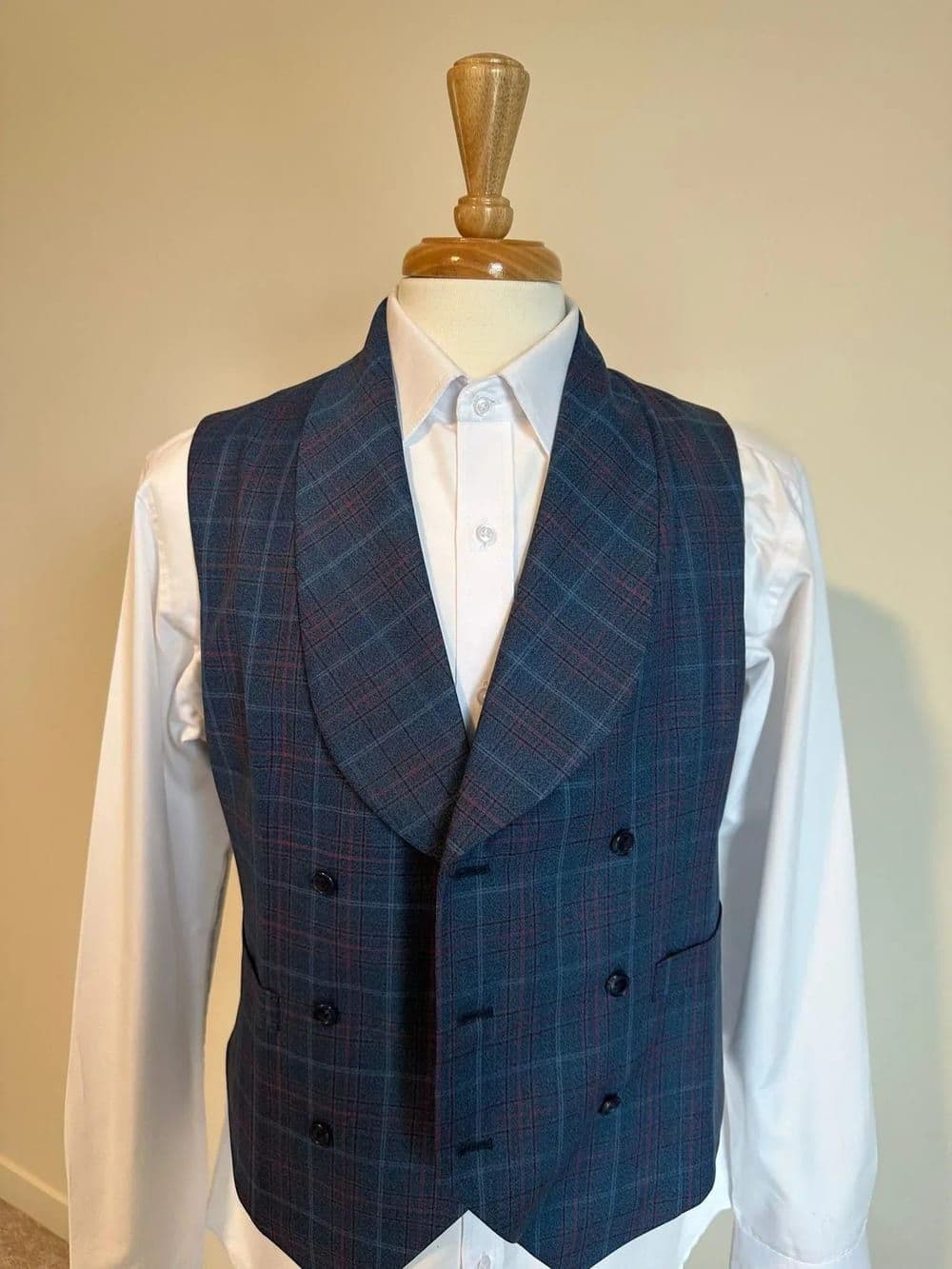
Darker skin tones can support a wide range of suit colours because stronger depth often allows for sharper contrast. Navy, charcoal, black, burgundy, emerald, chocolate brown, and lighter greys can all create clean separation when balanced correctly.
The main consideration is usually contrast distribution rather than darkness alone. Suit colour, shirt colour, and surrounding accessories should work together so the outfit feels cohesive and intentional.
How Hair Colour Changes the Equation
Hair colour affects how much natural contrast already exists around the face. Suit colour works best when it supports that contrast instead of distracting from it.
Someone with dark hair and lighter skin can usually support deeper suit colours more easily. Someone with lighter hair and lighter skin may benefit from softer transitions and reduced contrast. Eye colour can also slightly affect overall balance, especially in lower-contrast appearances.
High Contrast vs Low Contrast Appearance
High contrast appearance usually means there is a strong separation between hair, skin, and eye depth. Dark hair with fair skin is a common example. Navy, charcoal, black, and deeper greens often work well because they reinforce that structure.
Low contrast appearance means the hair, skin, and eye depth sit closer together. Light brown, grey, blond, or softer hair colours paired with lighter or medium skin often respond better to medium grey, softer navy, taupe, and textured neutrals.
Balancing Hair, Skin, and Suit Colour
Skin undertone usually determines the colour family first, while hair depth influences how bold or restrained the contrast should feel.
Dark hair often supports deeper tailoring colours naturally. Grey, blond, or lighter brown hair usually pairs better with cleaner mid-tone contrast instead of extremely dark combinations. Dyed hair or major shifts in hair colour can also change which suit colours feel most cohesive.
Warm brown or red hair commonly works well with navy, forest green, warm grey, and certain browns. Highly orange, rust-heavy, or strongly yellow-brown suits can sometimes compete visually with the warmth already present in the hair.
Colours That Commonly Clash or Wash You Out
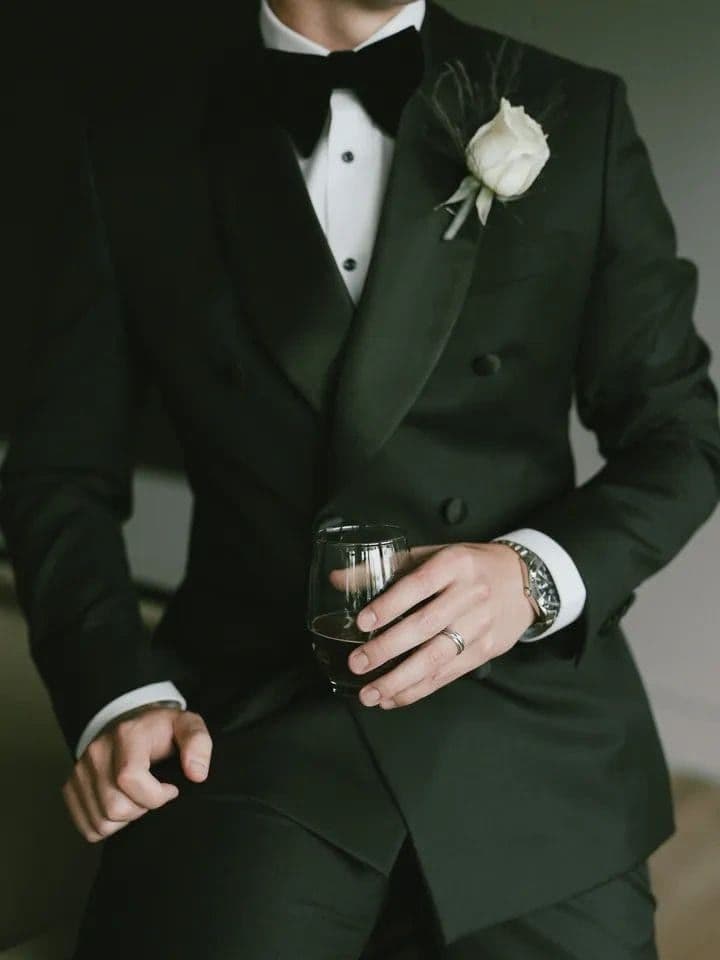
Some suit colours become harder to style when they sit too close to the complexion, conflict with undertone, or create uneven contrast near the face:
- Pale beige on lighter skin, can reduce facial definition
- Icy grey on warm undertones, can reduce warmth within the complexion
- Yellow-heavy tan on olive skin, can soften natural depth
- Bright saturated blue on low contrast appearances, can become visually dominant
- Black on very fair low contrast appearances, can create stronger shadowing
- Warm brown on cooler undertones, can appear less naturally aligned
- Muted green on olive complexions, can blend too closely with the skin
- Very pale grey with light hair and lighter skin, can reduce separation
These colour relationships can often be adjusted through fabric texture, shirt pairing, lighting, and overall styling direction. Custom tailoring allows more control over those details because colour selection is considered alongside fit, fabric, and wardrobe coordination.
Building a Versatile Colour Foundation for Your Wardrobe
A versatile wardrobe usually begins with neutral tailoring colours that work across multiple environments. Navy and charcoal are commonly used as foundations because they adapt easily between business, formal, and smart casual use while remaining compatible with a wide range of undertones.
Most wardrobes benefit from establishing one or two reliable neutral suits before expanding into more expressive colours. Medium grey, deep brown, forest green, and muted blue often integrate well once foundational colours are established.
When uncertain, slightly deeper and cleaner shades are usually easier to style consistently than very pale or heavily saturated colours. Conxeppt Clothing’s private tailoring process includes fabric and colour guidance designed around long-term wardrobe versatility instead of short-term trend selection.
Choosing Custom Suit Colours With Conxeppt Clothing in Edmonton
Custom suit colour selection involves more than choosing a preferred colour swatch. Lighting, fabric sheen, texture, shirt pairing, and proximity to the face all influence how the final garment appears once worn.
Conxeppt Clothing provides private tailoring in Edmonton with access to a wide range of fabrics, patterns, and customization options, allowing colour selection to be evaluated alongside fit, garment structure, and personal styling preferences.
Some clients prefer colours outside their most naturally balanced range, which is common in custom tailoring. In those situations, shirt contrast, fabric texture, lining choices, or accessory coordination can help maintain cohesion while still allowing personal preference to guide the final suit design.
Schedule a private appointment